The Dixie Henhouse Homestead at Ellis Farms

The Dixie Henhouse Homestead at Ellis Farms

Friday, August 9, 2013

It's Still Blazing Hot....But We're Planning For Fall!

Folks are still taking summer vacations and enjoying the warm weather, but at our place.....we are planning and planting....for our first Fall crop. We hope to have red cabbage, green cabbage, broccoli, kale, lettuce, spinach, and turnips.We are expanding into our upper field and hope to have 200-300 plants going of each variety. We have begun working on seed trays this week and we are crossing our fingers that all goes well to start these plants.
Our newest hen, a Dark Brahma that our daughter named Bootsie, has been at the farm almost two weeks. She is making herself at home and getting to know her new flock family.
The next "big" family project coming up at the end of the month is harvesting the sorghum cane and continuing on with the Ellis family tradition of making molasses. The family has made molasses in Lincoln County for over 75 years. Last year, they made over 60 gallons. The family tradition and ways of harvesting and cooking have been passed down from generation to generation. It's an interesting process to see in person. We will be cutting around the end of the month. If you're in for a road trip and want to see the molasses being made, we'd love to have you.


Monday, July 29, 2013

Rainy Days On The Homestead

I'd never have thought I'd ever say this...but I'm ready for a drought. This extremely rainy summer has caused a fiasco here on the farm and in my hometown in general. My goats are ticked because they hate the rain, which forces them into the barn most days....making a very stinky place in a quick way. The chickens tend to hang in there with them so the stink factor multiplies. All this means more frequent cleanouts of the shavings in the barn so that everyone stays healthy. Another result of this overabundance of rain is a decrease in egg production. I'm hearing from some of my chicken friends that they are seeing this as well. Sadly, our garden has also been affected by the rain and our output has been much less than we originally planned for. I guess you live and learn. But we are fortunate for what we've been able to do this first year.


This month has been nothing short of nuts. It's the only way to describe it. I performed my first surgery on an injured chicken. Ruby, one of our Red Cuckoo Orpingtons, developed Bumblefoot. All I can say is THANK GOD for the Livestock Production class I've been taking and this wonderful blog I follow The Chicken Chick. If it weren't for the step-by-step instructions, we'd never have been able to do this. My kitchen island looked like a murder scene but we did it. Miss Ruby is back to the coop with her buddies and healing well.

Sadly, we lost one of our favorites recently. I came home from work to find Big Bertha dead between the coop and the barn. We know she was an older bird. She had been in good health and we hadn't noticed anything odd with her. She was one of our favorites who loved to eat peanuts from your hand. We will will miss her dearly.


This past weekend, the western end of Lincoln County that I call home, suffered a major flash flood. Several roads were under water, livestock was washed away, and homes and basements were flooded. It was truly devastating to our small town. Thankfully, Ellis Farm was unscathed in the mess. We do have a creek that runs adjacent to the area where the chickens and goats are. I checked on them periodically all weekend. We were blessed to have no damages when so many others can't say that. They continue to be in our prayers.

On a brighter note, we are bringing a new chicken home this afternoon. She's a year old Dark Brahma. A "big 'ol girl" as we say. We have a juvenile Buff Brahma that we recently brought to the farm and I've fallen in love with the breed. We are excited to have her. Peace, Love, and Hugs......Til next time......

Thursday, July 11, 2013

Livestock Production 101

This summer I've been doing something I swore was done and over with in 2003 when I finished my Masters degree. I went back to school. But this time it's much more fun! Early in the Spring, I discovered that Western Piedmont Community College in Morganton, NC was offering a short course on Livestock Production. The cost of the class was relatively inexpensive in the grand scheme of things. The course consists of 4 Saturdays, spread throughout the Summer where they teach you all you need to know about the three common "small farm" livestock options and how to use these animals to live off the land. The last Saturday is dedicated to teaching you basic veterinary care. We decided that it would be good to invest $120 to take this class so that I could soak up as much info as possible. A friend of mine is taking the class also. I've had one class so far...SHEEP 101...which was pretty interesting. We don't have sheep on our farm, but I learned that sheep and goats are pretty similar in terms of their care.
Western Piedmont has its own small self-sustaining farm on campus, which I found to be very cool. They sheer the sheep and process the wool and sell it. The money goes back to the campus. The goats are Nubian dairy goats, which have beautiful faces and awesome floppy ears. The goats on the campus farm are very friendly and love to be petted. They have a wonderful set up and I am learning a great deal already. This coming Saturday is GOAT 101 followed by CHICKEN 101 in a couple of weeks. The vet care day is in August. I'm glad that I decided to go back to school for some learnin' that is actually fun and will benefit us on our family farm. Speaking of dairy goats, By this week, I had accumulated enough goat milk- a little over 5 quarts to be exact and I made my first run of goat cheese. We decided to start with an easy recipe for making chevre' which is a mild and creamy cheese, almost like what most know as cream cheese. Once the cheese is made, you can add flavors or spices to make it whatever you wish. It can be kept in the fridge for up to two weeks or, if left plain, you can freeze it for up to 6 months. When you decide to use it, you just thaw it out and add your spices then. Each batch makes about two lbs. of goat cheese.
I'm still learning, so this is a trial and error thing for me. This first batch I thought was too rubbery, but we salvaged it by running it through the blender and adding a little more milk to it, turning it into basically a spread. I split our batch into two 1 lb portions. I added spices and made a batch of garlic dill and a batch of spinach & herb.

Sunday, June 30, 2013

Changes

Life at our house has been nothing short of crazed lately, which is why I haven't done much blogging. Our garden has exploded with veggies and I'm trying to can, pickle, or sell to make room for more.
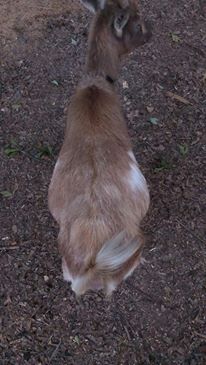
Cocoa kidded on the 20th with a gorgeous buckling, who I think looks like a little cow.
In only a week, we have found a buyer for him. They specifically requested a bottle baby so at a week old, he is leaving us today to travel to his new home in the NC Mountains. We also sold all of the Silkie chicks that we hatched out for Miss Mudpie, brought in 3 more hens, one being a special needs crossbeaked Americauna. And tomorrow, we are adopting a special needs Manx kitty named Diamond, who will be our official farm cat. In the midst off all this, we managed to put in a new pool liner next door at my father-in-laws, just in time to help our youngest celebrate her 5th birthday. We are traveling to Black Mountain today to visit Round Mountain Creamery, NC's only Grade A Goat Dairy. I'm hoping to learn some tidbits of info to use with my dairy goats here. I'm off from my full time job all week and intend to relax a bit and spend time with my kiddos. Til next time.....

Wednesday, June 12, 2013

Trying To Catch My Breath

I'm trying to come up for air here but goodness it's hard!!! We've had so much going on at the farm and there is still so much to do. Some days I feel like I've bitten off more than I can chew, but I'm hard-headed and determined. I refused to say that I can't do something. So....where to start? These past few weeks since my last post have been non-stop. On top of family and farm life, I've started a new part time job at a Crisis/Detox facility, which is very different from my world of working with juvenile delinquents. I'm still adjusting, learning, and finding my way. On the farm, we have continued tending to our garden, which has begun giving us gifts.I enjoy going out to the garden after work each day to see how things have changed in such a short amount of time.
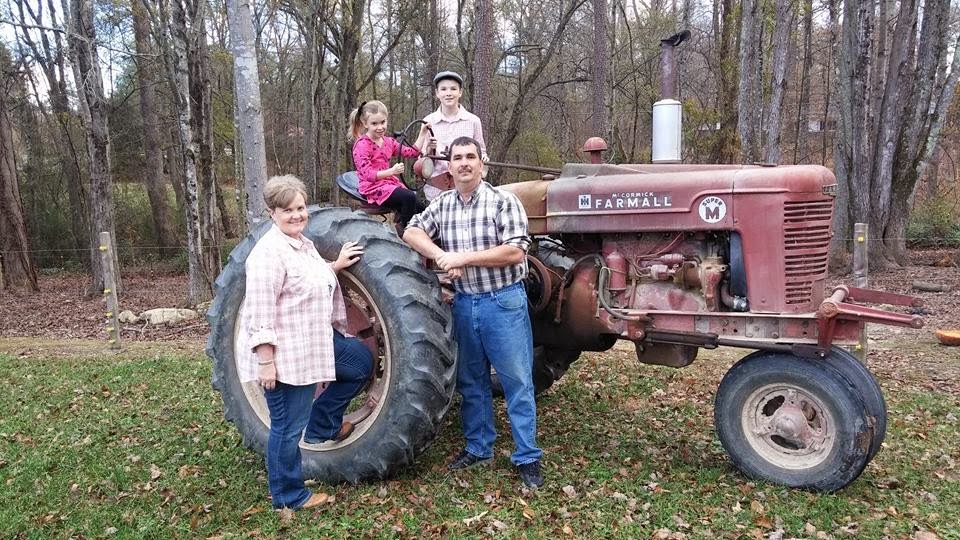
We have cut and baled hay and gotten it loaded into the barn loft. We will have to do it again in the fall. This provides the main food source for the goats and the rabbit. Considering it's free, that's an awesome thing. The kids were a huge help in the process and our oldest learned to drive the tractor while we loaded up the trailer with the bales in the field. He's learning that getting older means more responsibilities on the farm.
Given the increased number of animals on our homestead, we've begun learning some basic veterinary care that we can do ourselves at home versus taking the animals somewhere or calling a vet out to the house. You Tube is a wonderful learning tool in that regard....ie. giving a goat a vaccine, The hubby did it like a pro. Last night was treating the rabbit for ear mites. A week ago, it was a chicken who got pecked in the eye by another chicken. It's a never ending saga when you have farm animals.
We are prepping for Cocoa to have her babies (I swear there has to be more than one in there as big as she is.) I am assembling a birthing/kidding kit based on what I've gathered reading online, books, and from other goat owners.
We are very excited to have our first dairy goats born on the farm. Yesterday I ordered a Cheesemaker's kit from Hoegger Supply Company. It has everything that I need to get started. I'm anxious to learn to make goat cheese in different ways.

Now...on top of everything else we have going on, we did manage to have a little fun on the farm these last few weeks. We hosted a local photographer who came out to do family photo sessions. We had hay bales, tractors, the barn, and a rustic bench that were used as backdrops for some really great shots. You can check these out here Family Photo Sessions At Ellis Farms. Here is one of my favorites of us. We are planning to do this again in the Fall. I'm hoping we can make it a regular event. Til next time!


Wednesday, May 22, 2013

Getting Trashy On The Farm

Recently at Ellis Farms, we "acquired" a Rubbermaid tote full of worms and worm dirt. I say "acquired" because it was essentially given to us from the local 4-H Office. I have been involved in the 4-H program here since I was 5 years old, first as a 4-H'er then as a volunteer. I currently serve on the 4-H Advisory Board. At the last board meeting, I was asked, "Hey! Do you want our worms?" And I was like, "Huh?" It was then I was quickly educated on the world of Vermiculture. According to Wikipedia, "Vermicompost is the product or process of composting using various worms, usually red wigglers, white worms, and other earthworms to create a heterogeneous mixture of decomposing vegetable or food waste, bedding materials, and vermicast. Vermicast, also called worm castings, worm humus or worm manure, is the end-product of the breakdown of organic matter by an earthworm.[1] These castings have been shown to contain reduced levels of contaminants and a higher saturation of nutrients than do organic materials before vermicomposting.[2] Containing water-soluble nutrients, vermicompost is an excellent, nutrient-rich organic fertilizer and soil conditioner.[3] This process of producing vermicompost is called vermicomposting."

And so, this tote of worms made it's way to our upstairs office where, for the past few months, I have fed them veggie scraps and left them alone. Easiest pet you'll ever have! Haha

This past weekend, I decided the worms needed to make their way from the office to a REAL compost bin. So I did some quick research, finding a great helpful article Composing- A Guide To Making Compost At Home. Using scrap wood from the family sawmill, and in no more than an hour, our household compost bin was complete.


My plan, is to use the compost for planting flowers mainly, but I'm sure it will be used in the garden. It's a great way to make natural fertilizer from things that you'd normal throw out with the trash. The next thing I did was order a kitchen composter that will fit under the kitchen cabinet so I can collect the food scraps and then, when it's full, dump it into the outside bin. I found a cute one online for $19.00 plus free shipping at Hayneedle.

Monday, May 13, 2013

Rainwater Harvesting

Recently we began harvesting rainwater at Ellis Farms. Now....before you look into doing this at your own home or farm, make sure you are aware of what the law is in your particular area. In some states, it is illegal to harvest rainwater. In North Carolina, former Gov. Purdue signed a bill into law in 2009 which allowed residents here to be able to collect and use rainwater North Carolina To Allow Rainwater Harvesting (news article).
We were able to purchase five used 55-gallon barrels for $40 out of Rock Hill, SC from a posting on a farm sales site on Facebook. One barrel we re-purposed to hold feed for the goats and the rabbit and the rest we decided to use for a rainwater collection system. The system has now been installed at the back of the barn and we are using it as drinking water for the chickens, goats, and the rabbit. So far it's working well. We have had a huge amount of rain over the past several days, so we've been able to test it out and work out some of the kinks along the way.
The N.C. Cooperative Extension Service through N.C. State University has an good document with pictures, diagrams, and other helpful information if you are interested in doing something like this on your own homestead. Urban Waterways- Rainwater Harvesting: Guidance For Homeowners